
I have good news for individuals and small business owners who have been shut out of Chapter 13 or Subchapter V because their debts were too high.

H.R. 7730, the Bankruptcy Threshold Adjustment Act, was presented to the President on November 5, 2026. It is expected to become law within days.
In my short legal career (all 21 years of it), this may be the single largest benefit to consumers I have seen. Once this law takes effect, nearly every working American with up to $2.75 million in debt will be able to use Chapter 13 to save a home, stop a foreclosure, and reorganize on a plan they can afford.
The 0.00% interest advantage
Here is one of the biggest benefits of Chapter 13 that most people don’t know about: unsecured debts like credit cards are repaid at 0.00% interest. Once you file, the interest stops.
Many credit cards today charge close to 30% interest. At that rate, a $50,000 credit card balance costs about $1,250 a month in interest alone, and that payment doesn’t reduce what you owe by a single dollar. In a Chapter 13 plan, every dollar goes toward the debt itself, and in many cases you repay only a portion of it.
You can easily see how paying back debt at 0.00% interest makes it much, much easier to get ahead.
A lifeline for small businesses still carrying COVID-era debt
When COVID-19 hit, thousands of small businesses survived by borrowing. Many took SBA loans, especially Economic Injury Disaster Loans (EIDL). When that wasn’t enough, many turned to merchant cash advances (MCAs), which pull money straight out of a business bank account every day or week, often at sky-high effective rates. Years later, many otherwise healthy businesses are being crushed by those payments.
Subchapter V, a streamlined version of Chapter 11, was built for exactly this situation. In plain terms, here is how it works:
- You don’t have to pay it all back. The business proposes a repayment plan, usually lasting three years (the court can approve up to five), based on what the business can actually afford.
- Payments are based on what the business earns. Creditors receive the business’s projected net income after reasonable operating expenses (what the law calls “disposable income”) over the life of the plan. They are not owed the full balance of the loans.
- Creditors must get at least what they would in a liquidation. The plan must pay creditors at least as much as they would receive if the business shut down and sold everything. For many small businesses, that number is small.
- Secured loans can be reduced to the value of the collateral. If an SBA lender or MCA company holds a lien on business assets worth less than the debt, only the value of those assets has to be treated as secured. The rest becomes unsecured debt, paid only from the plan.
- The owners keep the business. Unlike a traditional Chapter 11, the owners can keep their ownership without paying every creditor in full.
- The rest is discharged. Once the plan is completed, the unpaid balance on those SBA and MCA debts is wiped out.
The result: a crushing pile of COVID-era SBA and MCA debt can shrink dramatically, and in many cases most of it can effectively disappear.
One important caution: if you personally guaranteed an SBA loan or MCA, the business’s bankruptcy does not by itself release your personal guarantee. That needs its own plan, which may include a personal Chapter 13 or Chapter 7. I’ll walk you through both sides.
Rare bipartisan agreement
In a time of deep division in Washington, this bill passed without any opposition on record:
- The Senate first passed its own version, S. 3977, by unanimous consent on August 3, 2026.
- The House passed H.R. 7730 by voice vote on September 16, 2026. No member requested a recorded vote.
- The Senate then passed H.R. 7730 by unanimous consent on September 28, 2026. Unanimous consent means the bill passes only if no senator objects. Every one of the 100 senators had the chance to stop it, and not one did.
In other words, Republicans and Democrats in both chambers agreed that families and small businesses need access to these bankruptcy tools.
Why the wait? The parchment paper process.
You may wonder why a bill that passed in September only reached the President in November. Before any bill can become law, it goes through a formal step called “enrollment.”
- The law requires it. Under federal law (1 U.S.C. § 106), every enrolled bill passed by Congress “shall be printed on parchment or paper of suitable quality as shall be determined by the Joint Committee on Printing.”
- The final text is prepared and signed. Because H.R. 7730 started in the House, the Clerk of the House prepares the final, official text, which is printed on special parchment-finish paper. It is then signed by the Speaker of the House and the presiding officer of the Senate.
- It is hand-delivered to the White House. Only that signed parchment copy can be presented to the President for signature.
- It is preserved. Once the bill becomes law, the official parchment copy goes to the Office of the Federal Register, where it is assigned a public law number, and it is preserved at the National Archives.
What happens next
The President has 10 days, not counting Sundays, to sign or veto the bill. If he takes no action, it becomes law without his signature. That means we expect the new limits to take effect by November 17, 2026, if not sooner, barring a veto.
What changes
- Chapter 13: Today, individuals must have less than $526,700 in unsecured debt and less than $1,580,125 in secured debt, measured separately. The new law replaces those two limits with one combined limit of $2.75 million. This opens Chapter 13 to many homeowners with larger mortgages, along with business owners who personally guaranteed loans.
- Subchapter V: The debt limit for small businesses returns to $7.5 million, up from about $3.4 million today. The new limit has no expiration date.
When it applies
The higher limits apply only to cases filed on or after the date the law is enacted. If you are close to the current limits, the timing of your filing could matter a great deal.
You can follow the bill’s status on Congress.gov: https://www.congress.gov/bill/119th-congress/house-bill/7730
If you have been told your debts were too high for Chapter 13 or Subchapter V, or if your business is still struggling under COVID-era SBA or MCA debt, now is a good time to take another look. I’m happy to talk through whether these changes open new options for you or your business. Call me at 215-551-7109.
Stephen M. Dunne, Esq.
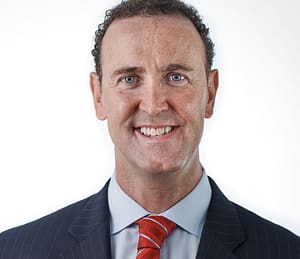
Attorney Stephen Dunne
thephiladelphiabankruptcyattorney.com


